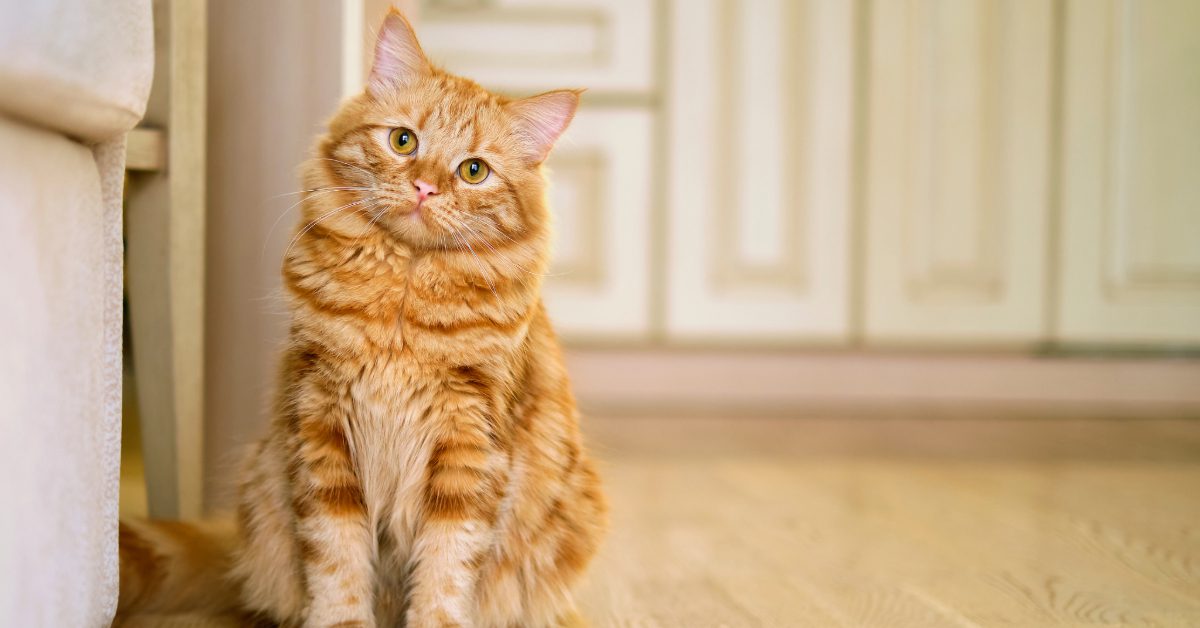
You reached down to pick up your cat and realized they feel a lot heavier than they used to. If your cat is fat, you are not alone. Feline obesity is one of the most common health concerns we see at Midshore Veterinary Service in Easton, MD, and it is also one of the most preventable. Excess weight in cats is driven by a combination of factors including overfeeding, low activity levels, age-related metabolic changes, and in some cases underlying medical conditions. Left unaddressed, it significantly raises the risk of diabetes, joint disease, and a shortened lifespan. The good news is that with the right guidance, an overweight cat can lose weight safely and feel like themselves again. Below, find out why cats gain weight, what the health stakes really are, and how to take the first steps toward a healthier cat.
Is My Cat Actually Overweight?
Before addressing why your cat is fat, it is worth confirming that weight gain is genuinely the issue. Not every cat with a round belly is overweight, and some naturally stocky breeds like the Maine Coon or Ragdoll are simply large-framed cats. The most reliable way to assess your cat’s body condition is a visit to Midshore Veterinary Service, where we use a body condition score to evaluate your cat’s weight relative to their frame.
At home, you can use two quick checks. First, run your hands along your cat’s sides. If you can feel the ribs without pressing hard, their weight is likely appropriate. If the ribs are difficult to feel through a thick layer of fat, your cat is likely overweight. Second, look at your cat from above. A healthy-weight cat has a visible waist behind the ribs. An overweight cat looks uniformly wide or even pear-shaped.
Why Is My Cat So Fat? Common Causes of Feline Obesity
Overweight cats rarely gain weight for a single reason. Most fat cats have a combination of contributing factors, and identifying them is the first step toward an effective weight management plan.
Overfeeding and Free-Feeding
The most common reason cats become overweight is simply consuming more calories than they burn. Free-feeding, where food is left available at all times, makes it very easy for cats to overeat. Many cat owners also overestimate how much food their cat actually needs. The portion sizes printed on commercial cat food labels are often larger than what an individual cat requires, and small daily surpluses add up quickly over months and years.
Too Many Treats
Treats are a meaningful source of extra calories for many cats, particularly in households where treats are used frequently for bonding or behavioral rewards. Treats should generally make up no more than 10% of a cat’s daily caloric intake. Even small, seemingly harmless treats can contribute substantially to weight gain when given multiple times a day.
Low Activity Levels
Indoor cats are far more prone to obesity than outdoor cats simply because they have fewer opportunities for natural exercise. A cat that spends most of the day sleeping on the couch burns fewer calories than a cat that hunts, climbs, and explores. Without intentional play and enrichment, indoor cats often live a sedentary lifestyle that promotes fat accumulation over time.
Spaying and Neutering
Spaying and neutering are essential for your cat’s health and for controlling the pet population, but they do reduce metabolic rate and alter hormonal balance in ways that can predispose cats to weight gain. Cats that are spayed or neutered may require fewer calories than intact cats of the same size and age. Adjusting food intake after these procedures is something our team at Midshore Veterinary Service can help guide.
Age-Related Changes
Middle-aged cats, typically those between 5 and 11 years old, are at peak risk for obesity. As cats age, their activity levels tend to decline while their caloric intake remains the same. Senior cats over 12, on the other hand, may actually lose weight due to age-related muscle loss and conditions like hyperthyroidism or kidney disease. The trajectory of your cat’s weight matters, and regular wellness exams at Midshore Veterinary Service help track it over time.
Medical Conditions
Although less common than behavioral causes, certain medical conditions can cause or contribute to a cat becoming fat. Hypothyroidism, while rare in cats compared to dogs, can slow metabolism and lead to weight gain. Insulin resistance and some hormonal disorders can also play a role. If your cat is gaining weight despite a controlled diet and normal activity, a veterinary evaluation is warranted to rule out underlying health issues.
Health Risks of an Overweight Cat
Cat obesity is not just an aesthetic issue. Carrying excess weight puts significant strain on nearly every system in a cat’s body. The health consequences of feline obesity are serious and well-documented:
- Diabetes mellitus: Obese cats are significantly more likely to develop diabetes. Excess body fat impairs insulin sensitivity, and diabetic cats often require lifelong management with insulin injections and dietary changes.
- Joint disease and arthritis: Excess weight puts added stress on joints, accelerating the development of osteoarthritis and reducing a cat’s mobility and comfort.
- Hepatic lipidosis (fatty liver disease): Fat cats are at risk for this life-threatening liver condition, which can develop rapidly if an overweight cat stops eating for even a short period.
- Urinary problems: Overweight cats have an elevated risk of feline lower urinary tract disease and urinary blockages.
- Respiratory difficulties: Excess fat around the chest and abdomen can compromise breathing and reduce exercise tolerance.
- Reduced life expectancy: Studies show that overweight cats have shorter lifespans on average than cats maintained at a healthy weight.
How to Help an Overweight Cat Lose Weight Safely
Weight loss in cats must be approached carefully. Rapid weight loss in cats is dangerous and can trigger hepatic lipidosis, a serious liver condition. Any weight loss plan for your cat should be developed and monitored by your veterinarian. That said, there are general principles that support healthy, gradual feline weight loss.
Accurate Portion Control
Using a kitchen scale or measuring cup to precisely measure your cat’s food at every meal is one of the most impactful changes an owner can make. Even small reductions in daily caloric intake, when sustained over time, produce meaningful weight loss. Your veterinarian at Midshore Veterinary Service can calculate an appropriate caloric target for your individual cat based on their current weight and target weight.
Diet Transitions
Some cats benefit from transitioning from dry food to wet food as part of a weight management plan, since wet food is generally higher in protein and lower in carbohydrates. Prescription weight management diets are also available and may be recommended depending on your cat’s needs. Any diet change should be gradual and guided by your veterinarian to avoid digestive upset or food refusal.
Increasing Physical Activity
Increasing your cat’s daily activity level does not require major effort. Interactive play sessions with feather wands, laser pointers, and puzzle feeders can make a meaningful difference. Feeding from food puzzles rather than a bowl slows eating and encourages movement. Even short daily play sessions of 10 to 15 minutes can help a fat cat begin to shed excess weight while also improving their mental well-being.
Signs Your Fat Cat May Have an Underlying Medical Issue
Most overweight cats are fat because of diet and lifestyle. However, contact Midshore Veterinary Service if your cat is gaining weight and also showing any of the following signs:
- Increased thirst and urination alongside weight gain (possible diabetes)
- Lethargy, hair thinning, or skin changes (possible hormonal imbalance)
- A pot-bellied appearance with weight loss in the limbs (possible organ disease or fluid accumulation)
- Rapid or unexplained weight gain despite no change in diet or activity
- Difficulty grooming, jumping, or moving that seems disproportionate to their weight
These signs indicate that a veterinary workup is the appropriate next step before pursuing any dietary changes independently.
What a Cat Weight Loss Program at Midshore Veterinary Service Looks Like
When you bring an overweight cat to Midshore Veterinary Service, we start with a thorough physical examination and body condition scoring. Depending on the findings, we may recommend bloodwork to rule out metabolic or hormonal causes of weight gain. From there, our team develops a practical, individualized weight loss plan that takes into account your cat’s current diet, activity level, household dynamics, and target weight.
We also provide follow-up support to monitor progress. Weight loss in cats is a gradual process, and regular check-ins help ensure the plan is working and allow for adjustments along the way. Our goal is always to help your cat reach a healthier weight in a way that is safe, sustainable, and fits your life as a pet owner.
A Healthier Weight Means a Happier, Longer Life for Your Cat
Asking “Why is my cat fat?” is the first step toward making a real difference in your pet’s health. Cat obesity is manageable, and the benefits of reaching and maintaining a healthy weight extend across your cat’s entire life. From better mobility and more energy to reduced disease risk and a longer lifespan, weight management is one of the most powerful things you can do for your cat.
If you are concerned about your cat’s weight, call us at (410) 820-9229 or book an appointment online with Midshore Veterinary Service in Easton, MD. Our compassionate and knowledgeable team is here to help your cat look, feel, and live better.
Recent Posts
About Us
At Midshore Veterinary Service, we don’t just care for animals—we care for the people who love them. Since 1994, we’ve strived to be the go-to veterinary hospital for cats, dogs, farm animals, and exotic pets in Easton, MD, and the surrounding areas.